
 Image 1 of 2
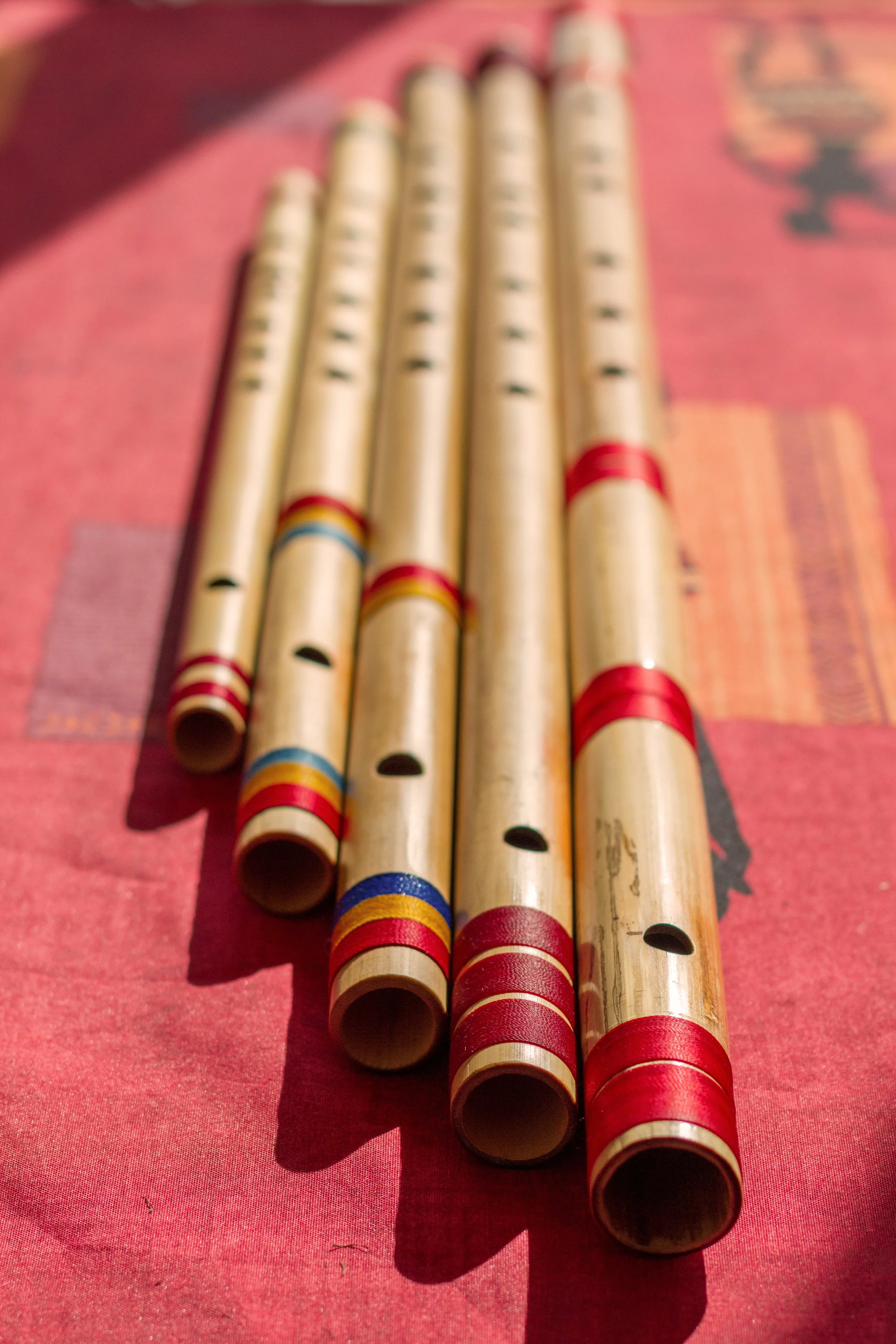 Image 2 of 2
The Melodic Bamboo Flute of India
History and Cultural Significance
The Bansuri is an ancient Indian bamboo flute, with roots tracing back over 3,500 years. It is deeply connected to Indian classical music, Hindu mythology, and folk traditions. The Bansuri is closely associated with Krishna, who is often depicted playing this flute, symbolizing divine music, love, and spiritual awakening.
Historically, the Bansuri was used in folk and devotional music, but it gained prominence in Indian classical music during the 20th century, thanks to artists like Pandit Pannalal Ghosh, who adapted it for Hindustani classical compositions. Today, the Bansuri is widely used in Indian, world, meditation, and film music, known for its soothing and soulful sound.
Tone and Sound
The Bansuri’s tone is warm, rich, and fluid, capable of producing deep, resonant bass notes as well as sweet, expressive highs.
•Lower register: Soft, mellow, and rich, ideal for meditative music.
•Higher register: Bright and fluid, allowing for intricate ornamentation.
•The Bansuri allows for gliding notes (meend), vibrato (gamak), and microtonal bends (sruti), making it ideal for Indian ragas and highly expressive playing.
•Unlike Western flutes, the Bansuri does not rely on keys—all notes and ornamentations are controlled by finger placement and breath control.
•Typically tuned to C, D, E, F, or G, but larger bass Bansuris can be tuned in B-flat or A.
•It is a fully chromatic instrument, meaning it can produce all notes through half-hole fingering techniques.
•Level of expertise required: Intermediate to advanced, as it takes time to master breath control, embouchure, and the intricate finger techniques used in Indian music.
Physical Appearance and Construction
•The Bansuri is a side-blown (transverse) flute, similar in playing style to the Western flute but made of bamboo.
•Sizes range from 30 cm (12 inches) for high-pitched flutes to 75-90 cm (30-36 inches) for deep bass flutes.
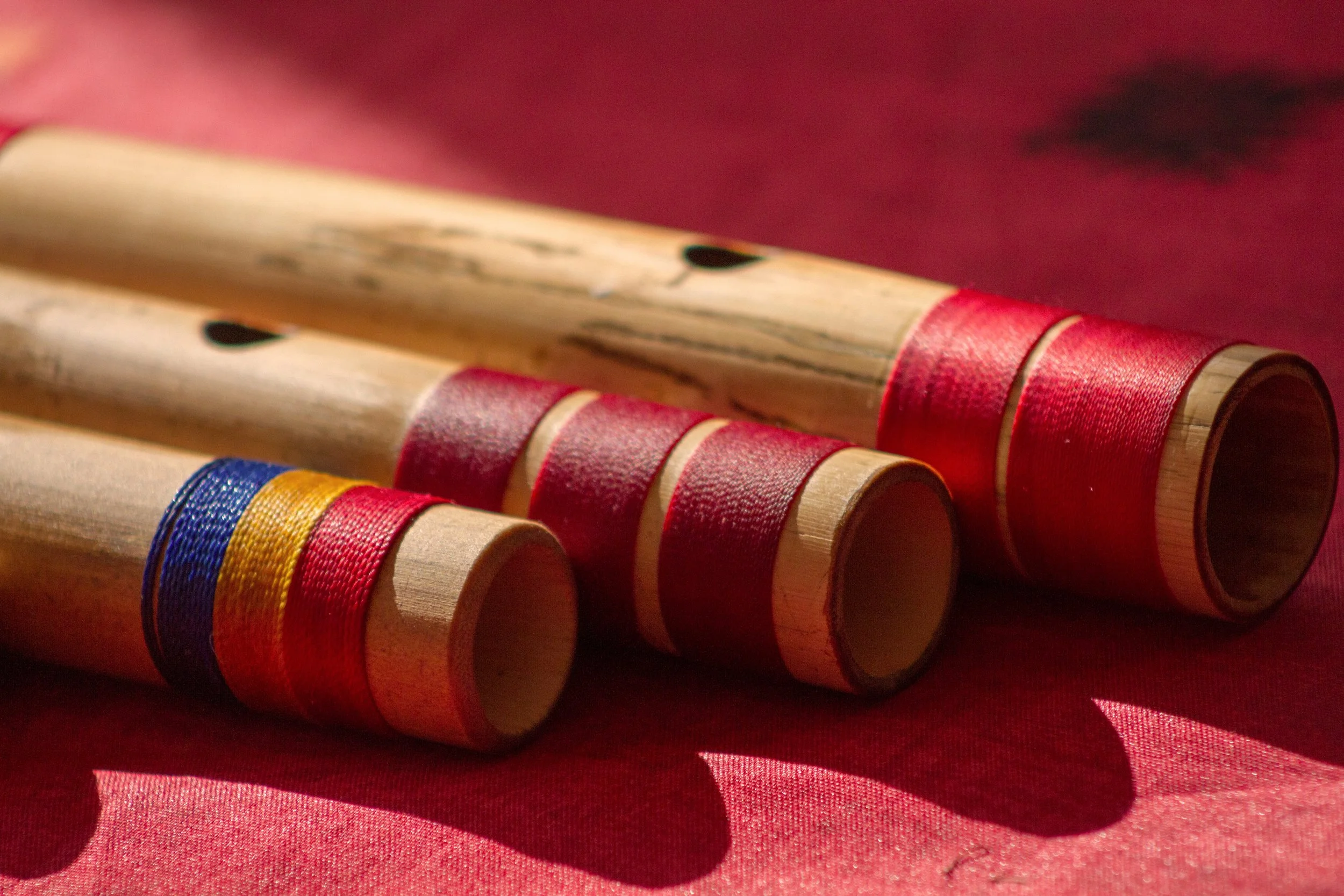
•Traditional Bansuris are made from bamboo, carefully selected for its resonant and lightweight properties.
•It has six to eight finger holes, depending on the style and tuning.
•Some larger Bansuris may have an additional vent hole at the bottom to improve tuning accuracy.
•Because of its natural bamboo construction, no two Bansuris sound exactly alike, adding to its unique charm.
•Some Bansuris feature engraved decorations or colored thread bindings to enhance their aesthetic appeal and durability.
Why is the Bansuri Unique?
1. Ancient Cultural Heritage – Used in Indian music and mythology for thousands of years.
2. Smooth, Melodic Sound – Capable of rich, deep tones and fluid note transitions, perfect for Indian classical and meditative music.
3. Expressive and Dynamic – Allows for microtonal bends, gliding notes, and intricate ornamentation that Western flutes cannot easily achieve.
4. Handmade from Natural Bamboo – Each Bansuri is unique in sound and resonance, with no mass-produced alternatives matching its tonal depth.
5. Used in Various Genres – While essential in Indian classical music, the Bansuri is also found in meditation, ambient, world, and film music.
Conclusion
The Bansuri is a deeply expressive flute, offering rich, meditative tones and highly nuanced ornamentation. Its connection to Indian classical music, spiritual traditions, and folk heritage makes it one of the most beautiful and versatile wind instruments in the world. Whether played in traditional Indian ragas or modern fusion music, the Bansuri continues to captivate listeners with its soulful and hypnotic sound.
The Melodic Bamboo Flute of India
History and Cultural Significance
The Bansuri is an ancient Indian bamboo flute, with roots tracing back over 3,500 years. It is deeply connected to Indian classical music, Hindu mythology, and folk traditions. The Bansuri is closely associated with Krishna, who is often depicted playing this flute, symbolizing divine music, love, and spiritual awakening.
Historically, the Bansuri was used in folk and devotional music, but it gained prominence in Indian classical music during the 20th century, thanks to artists like Pandit Pannalal Ghosh, who adapted it for Hindustani classical compositions. Today, the Bansuri is widely used in Indian, world, meditation, and film music, known for its soothing and soulful sound.
Tone and Sound
The Bansuri’s tone is warm, rich, and fluid, capable of producing deep, resonant bass notes as well as sweet, expressive highs.
•Lower register: Soft, mellow, and rich, ideal for meditative music.
•Higher register: Bright and fluid, allowing for intricate ornamentation.
•The Bansuri allows for gliding notes (meend), vibrato (gamak), and microtonal bends (sruti), making it ideal for Indian ragas and highly expressive playing.
•Unlike Western flutes, the Bansuri does not rely on keys—all notes and ornamentations are controlled by finger placement and breath control.
•Typically tuned to C, D, E, F, or G, but larger bass Bansuris can be tuned in B-flat or A.
•It is a fully chromatic instrument, meaning it can produce all notes through half-hole fingering techniques.
•Level of expertise required: Intermediate to advanced, as it takes time to master breath control, embouchure, and the intricate finger techniques used in Indian music.
Physical Appearance and Construction
•The Bansuri is a side-blown (transverse) flute, similar in playing style to the Western flute but made of bamboo.
•Sizes range from 30 cm (12 inches) for high-pitched flutes to 75-90 cm (30-36 inches) for deep bass flutes.
•Traditional Bansuris are made from bamboo, carefully selected for its resonant and lightweight properties.
•It has six to eight finger holes, depending on the style and tuning.
•Some larger Bansuris may have an additional vent hole at the bottom to improve tuning accuracy.
•Because of its natural bamboo construction, no two Bansuris sound exactly alike, adding to its unique charm.
•Some Bansuris feature engraved decorations or colored thread bindings to enhance their aesthetic appeal and durability.
Why is the Bansuri Unique?
1. Ancient Cultural Heritage – Used in Indian music and mythology for thousands of years.
2. Smooth, Melodic Sound – Capable of rich, deep tones and fluid note transitions, perfect for Indian classical and meditative music.
3. Expressive and Dynamic – Allows for microtonal bends, gliding notes, and intricate ornamentation that Western flutes cannot easily achieve.
4. Handmade from Natural Bamboo – Each Bansuri is unique in sound and resonance, with no mass-produced alternatives matching its tonal depth.
5. Used in Various Genres – While essential in Indian classical music, the Bansuri is also found in meditation, ambient, world, and film music.
Conclusion
The Bansuri is a deeply expressive flute, offering rich, meditative tones and highly nuanced ornamentation. Its connection to Indian classical music, spiritual traditions, and folk heritage makes it one of the most beautiful and versatile wind instruments in the world. Whether played in traditional Indian ragas or modern fusion music, the Bansuri continues to captivate listeners with its soulful and hypnotic sound.