
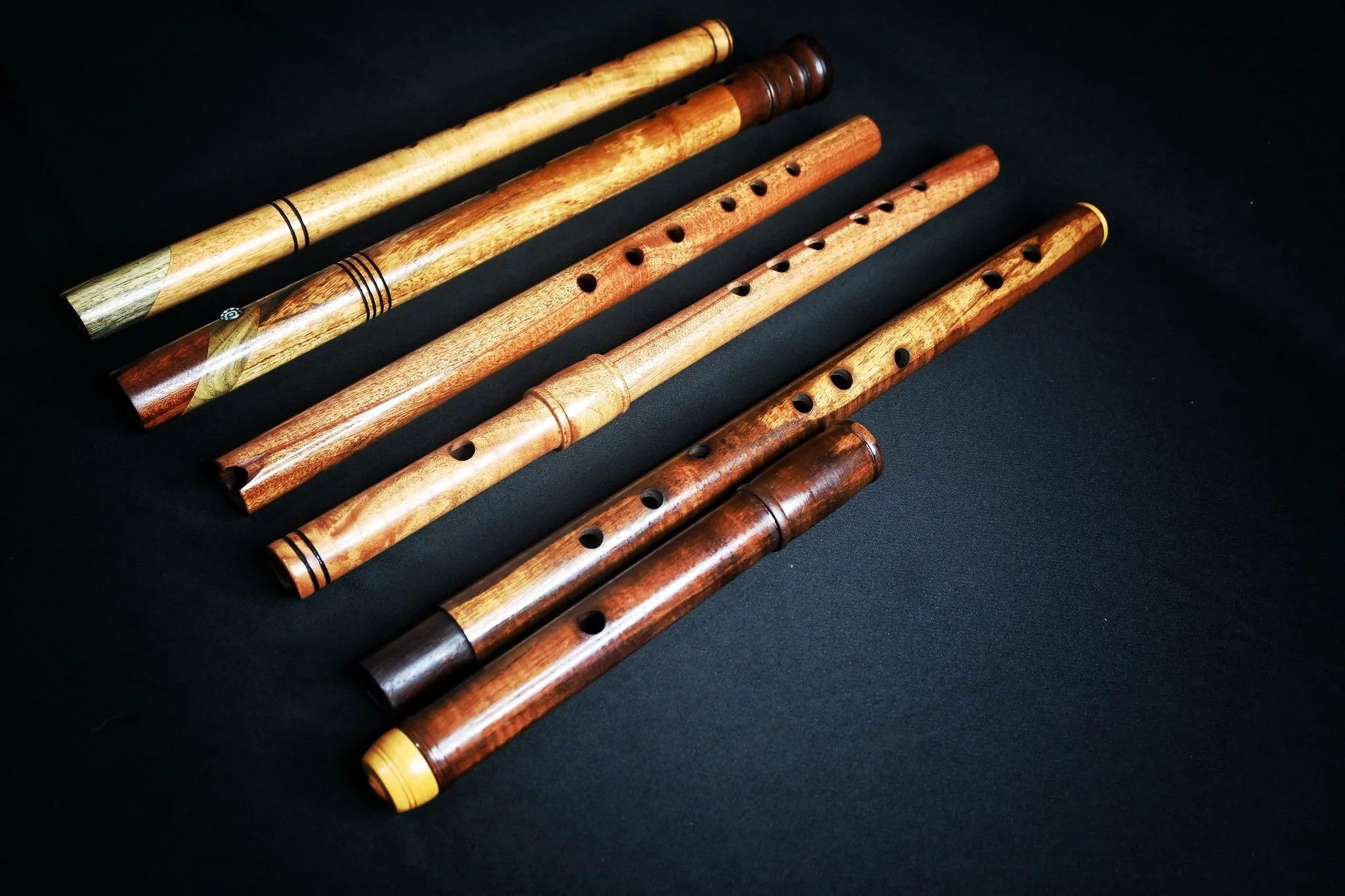
Long before orchestras tuned to an oboe, humans carved bone and wood. Ice Age flutes of bone and ivory whispered through caves; ancient reeds—Greece’s aulos, the Middle East’s ney, China’s dizi, Japan’s shakuhachi, the Andes’ panpipes—braided breath into ritual and song. In medieval Europe the raucous shawm and the huskier dulcian marched outdoors, later refining indoors as the lyrical oboe and bassoon. The recorder ruled Renaissance parlors until the eighteenth century, when a new upstart—the clarinet, shaped by Johann Christoph Denner—found its speaking voice. Then came engineering: Theobald Boehm reimagined the flute with ring keys and a redesigned bore, turning agility and even tone into the rule rather than the miracle. Keys multiplied, intonation steadied, and woodwinds became the orchestra’s color wheel—smoke, silver, velvet—carrying folk tunes and concertos from hearth to hall. Woodwinds are humanity’s oldest story told on a column of air.
Ney
Ney
Filters
No results found
No results match your search. Try removing a few filters.